
Lady Justice is one of the most recognizable symbols in the Western legal system, often depicted in courthouses, law firms, and government buildings worldwide. As both an artwork and a symbol of the rule of law, a well-designed Lady Justice sculpture can greatly enhance the authority and atmosphere of a legal or commercial space. This article explores the mythological origin, symbolic meaning, materials and craftsmanship, and typical applications of Lady Justice sculptures.

Why Lady Justice Appears Everywhere
In front of court buildings, in the lobbies of law firms, and at the entrances of government offices, one frequently sees a robed woman holding a pair of scales, often blindfolded and sometimes carrying a sword. This is the iconic figure of Lady Justice, representing fairness, impartiality, and the authority of law. Her image has become a universal visual language of justice, crossing borders, cultures, and legal traditions.
In modern architectural and interior design, Lady Justice sculptures are not just decorative pieces. They help communicate a professional and trustworthy image for institutions such as courts, legal service providers, and financial organizations. For project owners and designers, choosing a suitable Lady Justice sculpture has become an important part of shaping the overall identity of a space.

Mythological Origins: From Themis to Justitia
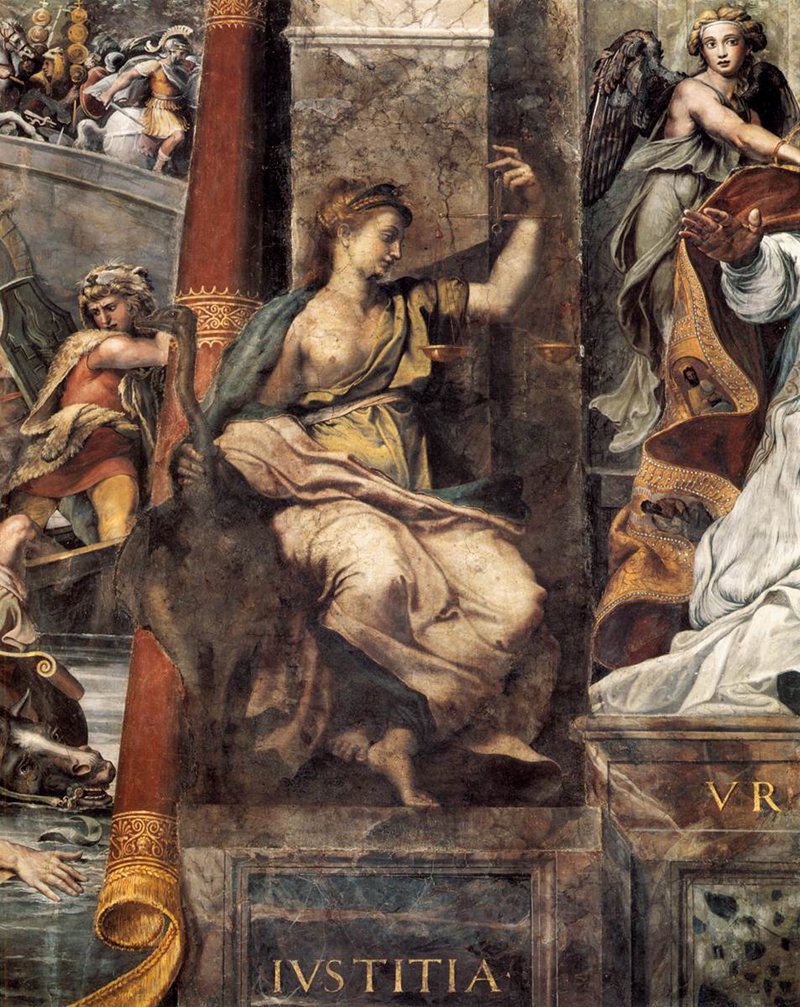
The roots of Lady Justice can be traced back to ancient Greek and Roman mythology. In Greek mythology, Themis is the goddess of divine order, law, and prophecy. She represents the higher moral order that governs both gods and humans, and is often portrayed as calm, dignified, and wise. In many early artworks, Themis appears holding symbols such as a scale or a cornucopia, emphasizing balance, order, and prosperity under just rule.

In Roman times, the figure of Justitia emerged. Justitia inherited many attributes from Themis but took on a more explicit legal and political meaning. Over time, artists and sculptors gradually solidified her image as a woman carrying scales and a sword, sometimes wearing a blindfold. This Roman version of Lady Justice is the direct prototype for most of the modern statues seen today in Western court buildings, legal institutions, and public squares.
Symbolic Elements of Lady Justice
A typical Lady Justice sculpture is composed of several key elements, each carrying its own symbolic meaning. Together, they form a complete visual statement about the principles of a fair and effective legal system.
Scales
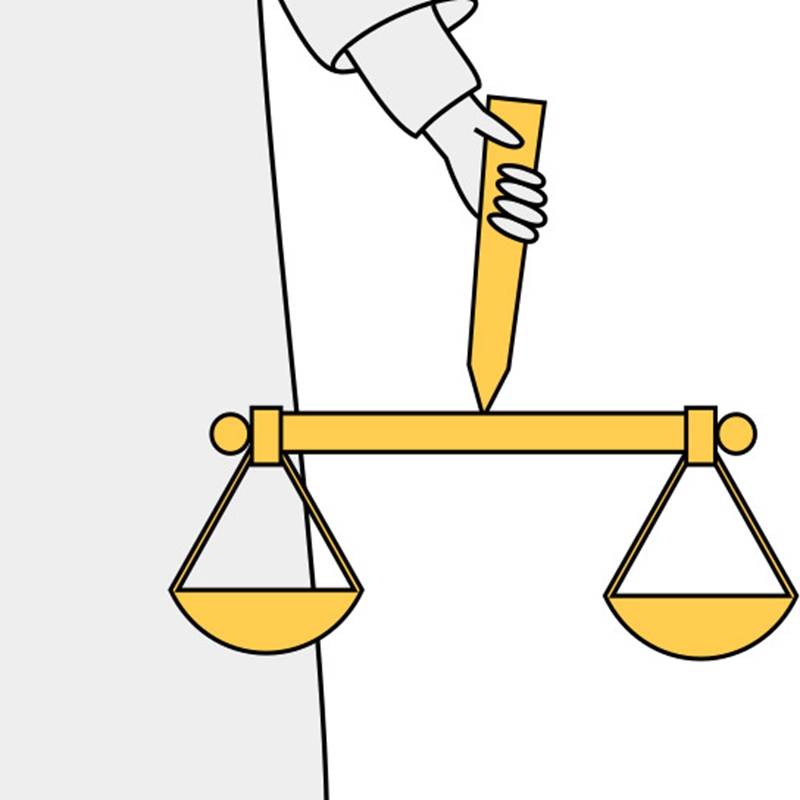
The scales in her hand represent the careful weighing of evidence and interests from both sides in a judicial process. They symbolize balance: the idea that decisions should be based on facts, arguments, and legal principles, rather than emotional bias or external influence. When both pans of the scale are level, it suggests that justice has been measured and delivered fairly.
Blindfold
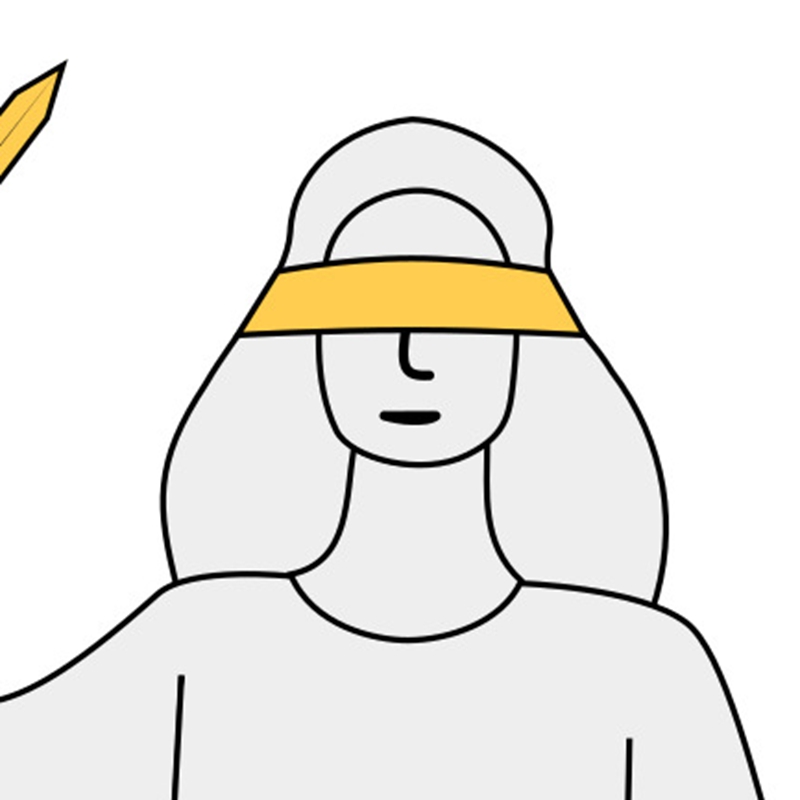
The blindfold is one of the most famous attributes of Lady Justice. It conveys the idea that justice is “blind” to social status, wealth, power, race, or personal connections. By covering her eyes, the artist communicates that the judge should not be swayed by appearances or external pressure. Although not all historical representations of Themis or Justitia include a blindfold, it has become a powerful modern symbol of judicial independence and impartiality.
Sword
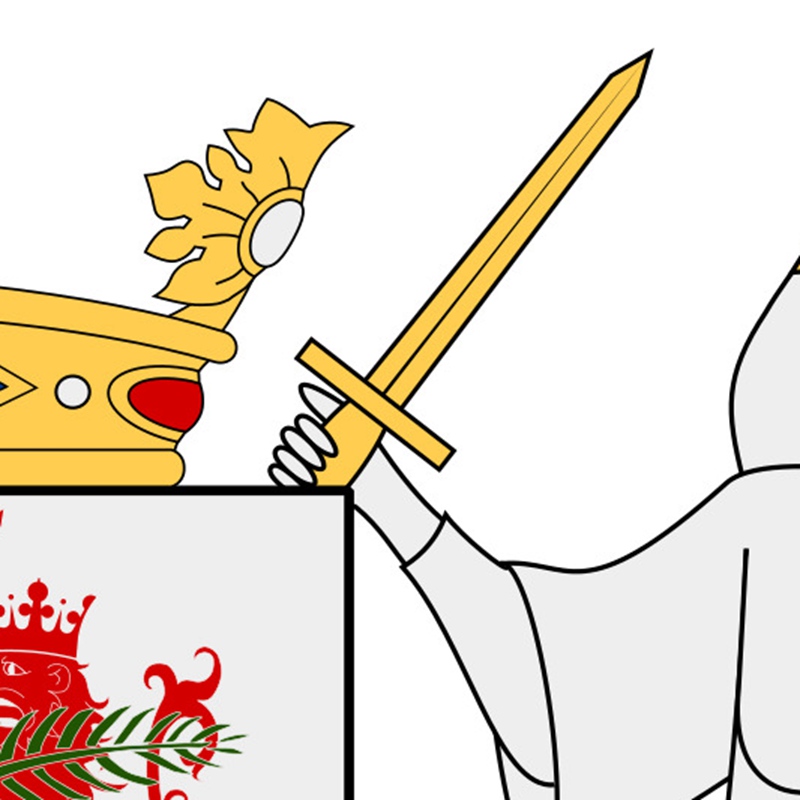
The sword in Lady Justice’s hand stands for the power of law to be enforced. It suggests that the law is not only about interpreting rules and deciding right from wrong, but also about implementing decisions and punishing wrongdoing when necessary. The sword is usually depicted as straight and sharp, reflecting clarity, decisiveness, and the potential consequences for those who violate the law.
Robe, Book, and Pedestal Details
The flowing robe expresses dignity, tradition, and the solemn atmosphere of legal institutions. A book or scroll at her side often refers to law codes, constitutions, or legal texts, symbolizing that all decisions are grounded in written law. A well-designed pedestal or set of steps beneath the sculpture reinforces the sense of elevation and authority, making the figure appear more monumental and central within the space.

6 Iconic Lady Justice Sculptures Around the World
In addition to mythological origins and symbolic meanings, several landmark Lady Justice sculptures have become visual icons of justice in different countries. Introducing these examples in your article can help readers connect their own projects with a global visual tradition.
1. Lady Justice on the Old Bailey, London

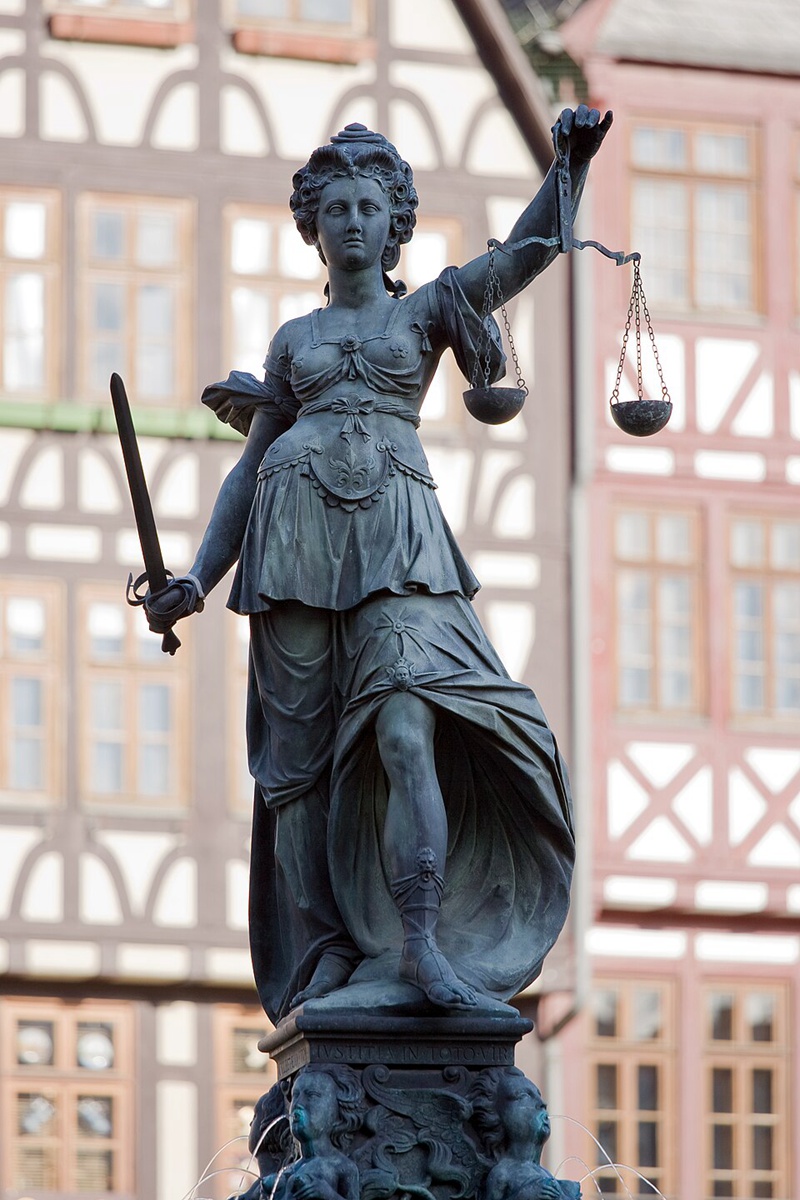
2. Lady Justice at Frankfurt’s Römerberg, Germany
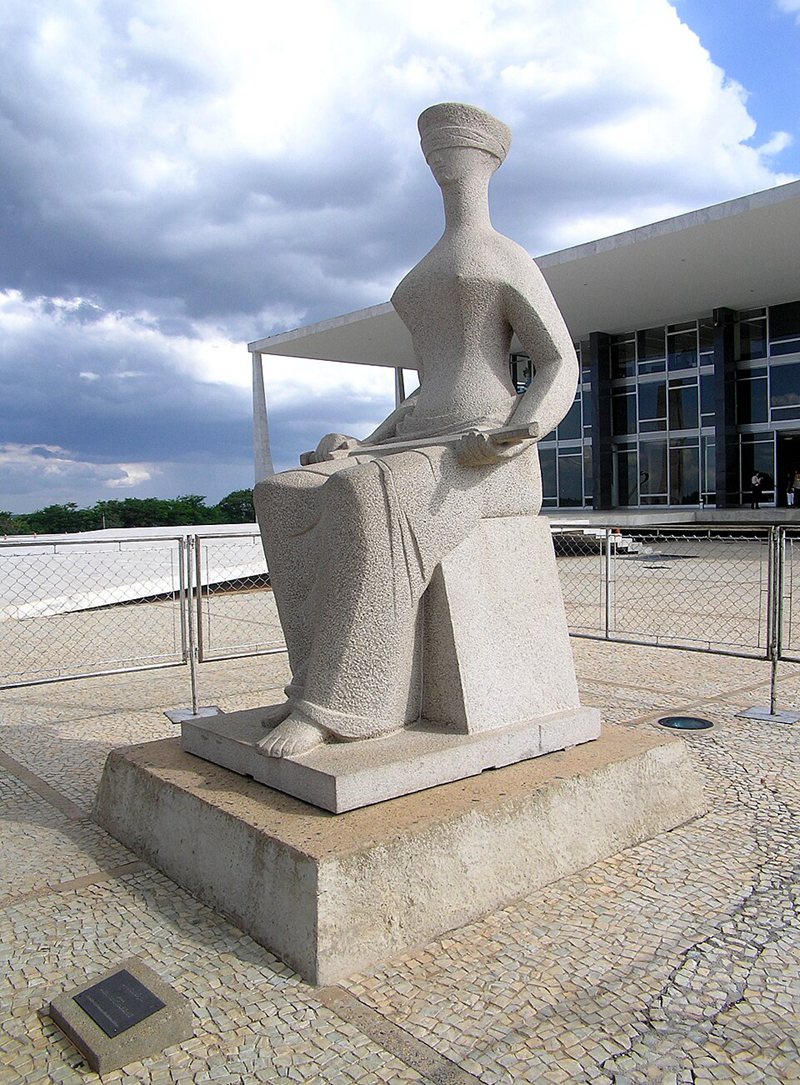
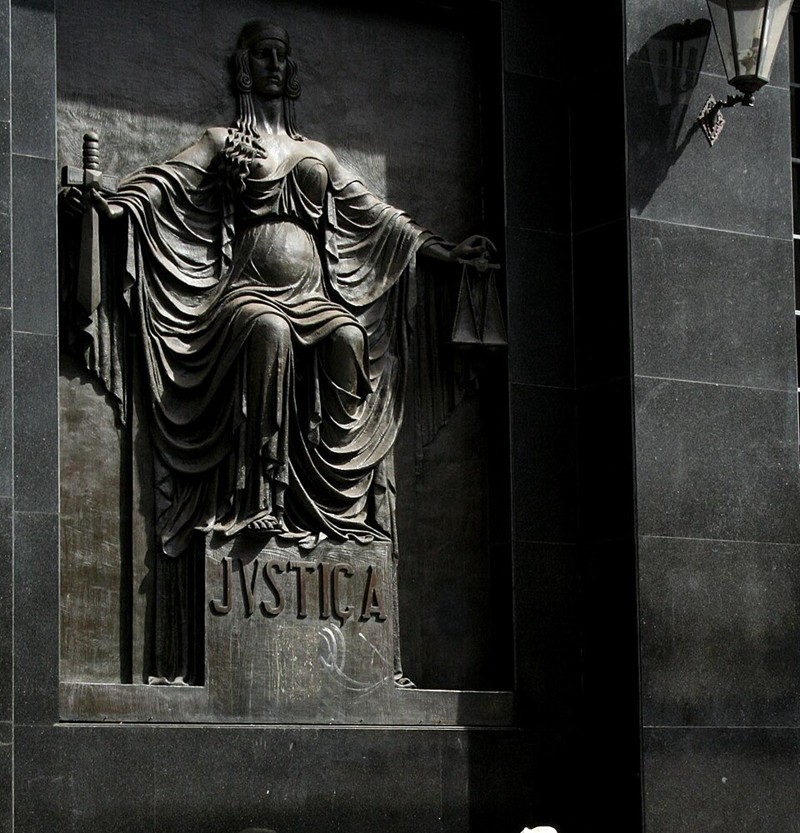
3. Lady Justice at the Supreme Court of Brazil, Brasília
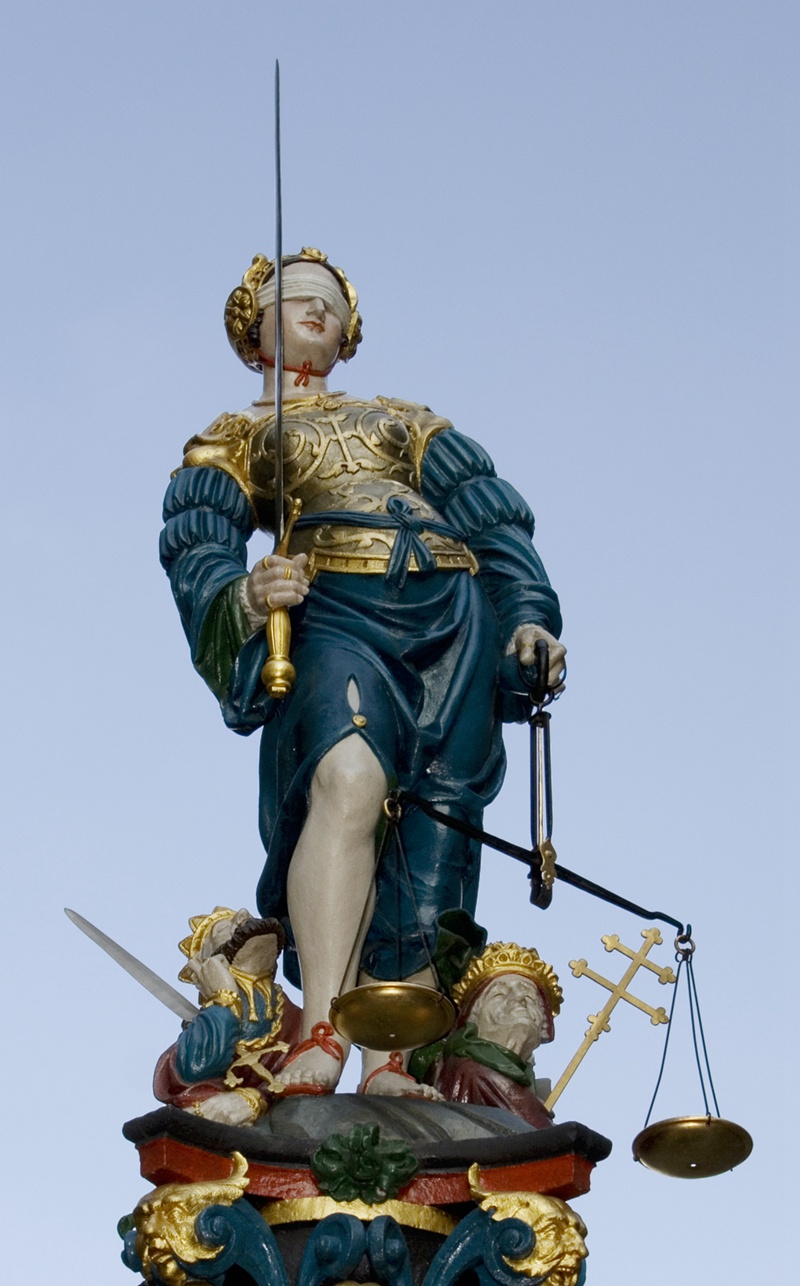
4. Statue of Lady Justice on the Well of Justice in Bern, Switzerland
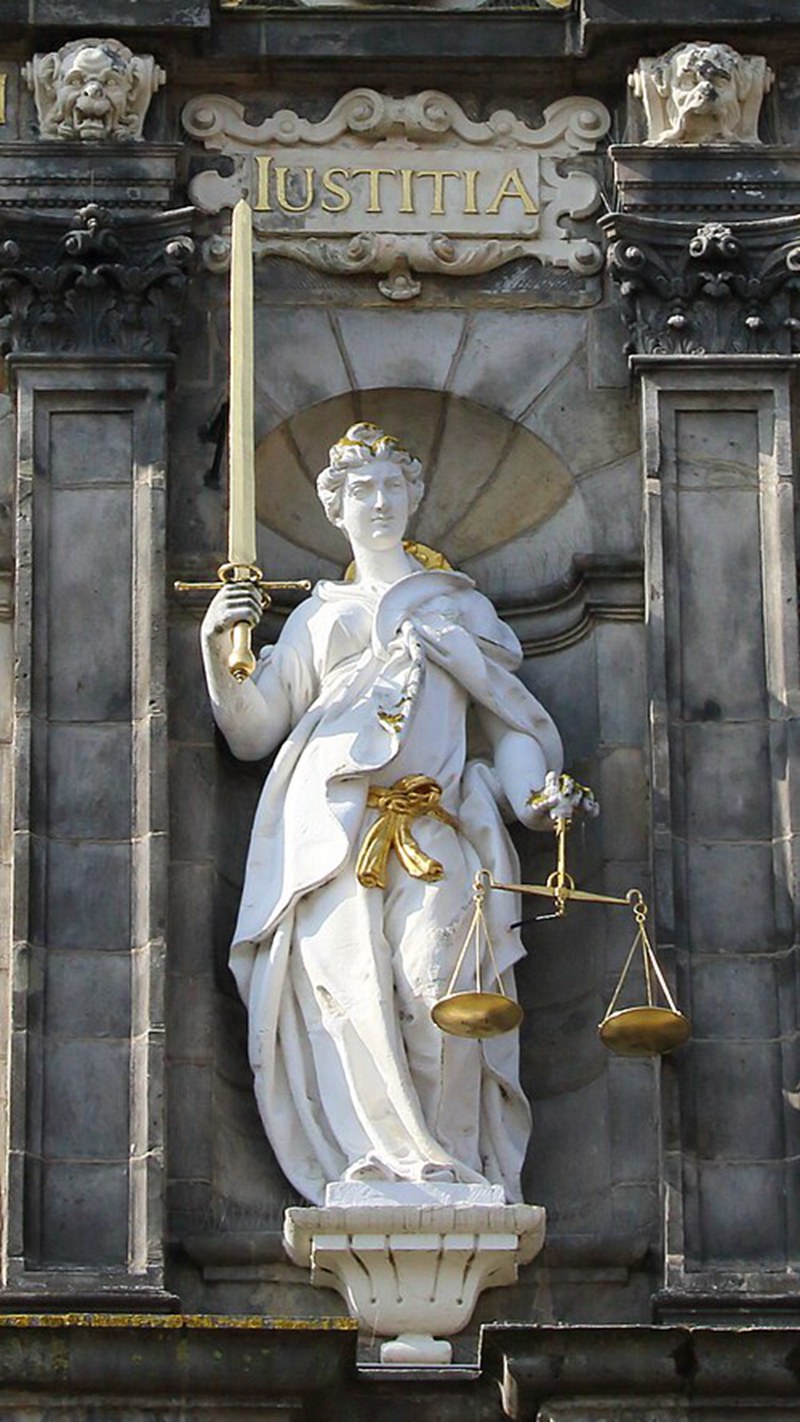
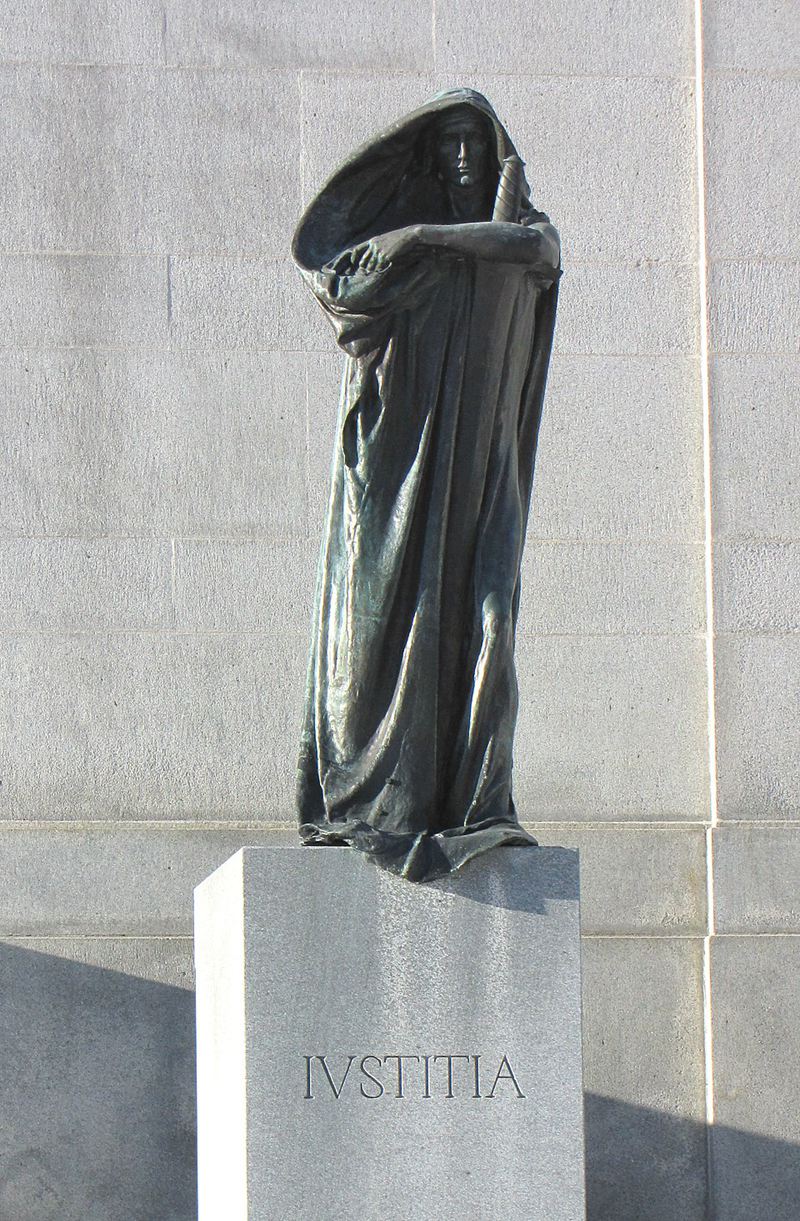
5. Justitia on the Delft City Hall, the Netherlands
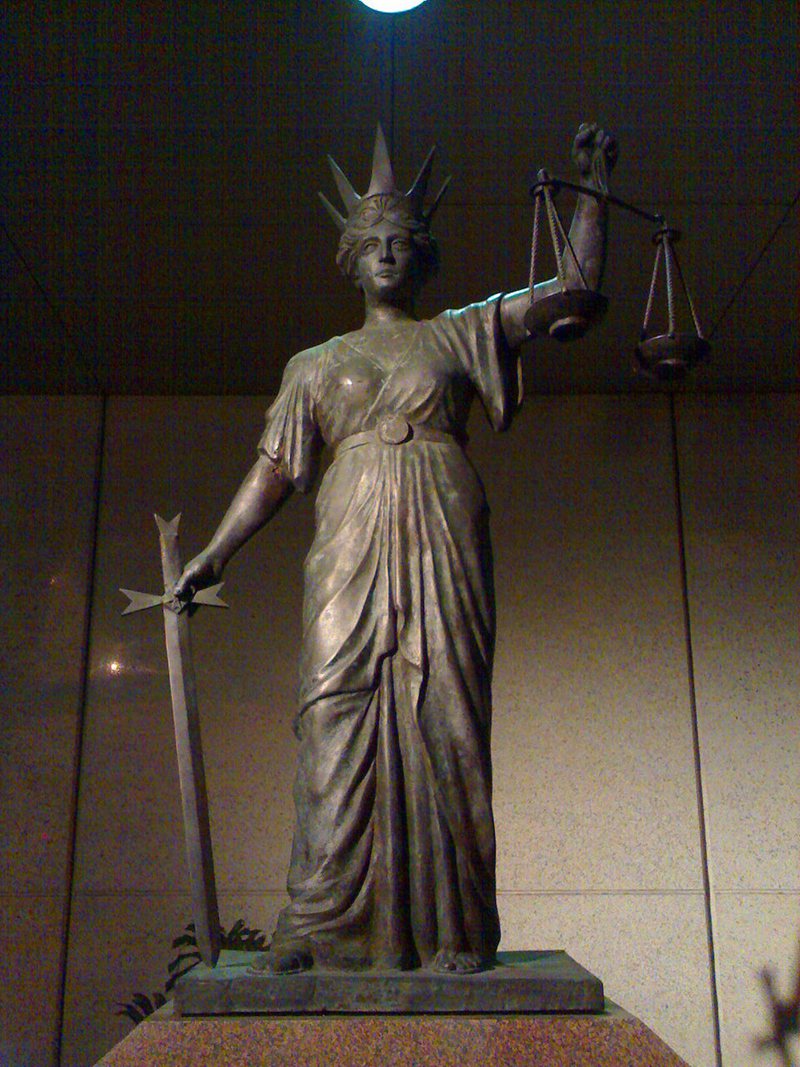
6. Goddess of justice, Themis, Australia
Bronze vs. Marble: Material Advantages
When selecting a Lady Justice sculpture for a project, material is a crucial consideration. Bronze and marble are the two most popular choices because they both offer durability, visual impact, and a strong sense of quality, yet they are suited to different environments and design styles.
Bronze Lady Justice
- Best for: Outdoor spaces (courthouse plazas, entrances, squares).
- Advantages: Durable, weather-resistant, and long-lasting.
- Appearance: Rich textures and patinas (e.g., antique brown, greenish, gold-tone) offer a timeless, elegant look.
- Details: Allows for intricate craftsmanship, such as robes, facial expressions, and scale chains.
- Ideal for: Courts and law firms seeking strong presence and fine artistry.
Marble Lady Justice
- Best for: Indoor spaces (lobbies, reception desks, offices).
- Advantages: Elegant, refined, and conveys purity and moral elevation.
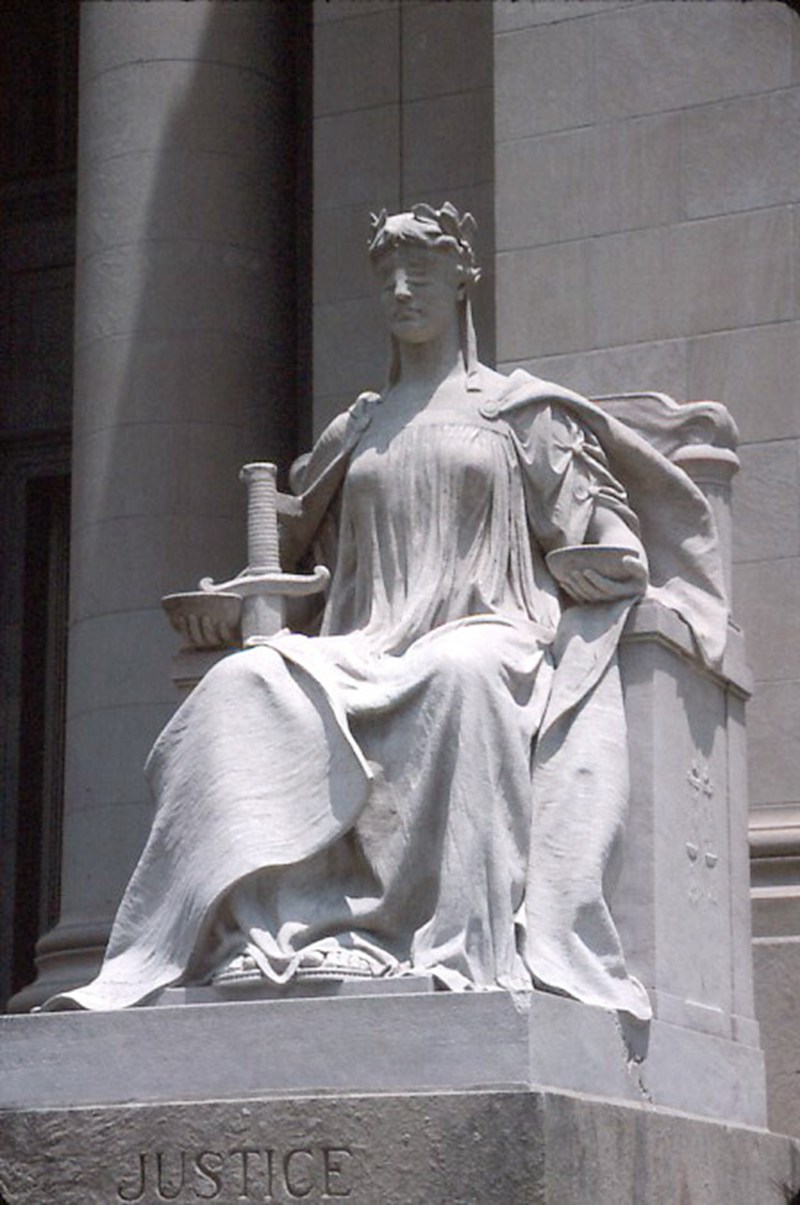
- Appearance: Natural veins and smooth surfaces complement minimalist or neoclassical interiors.
- Lighting: Enhances its beauty when placed in well-lit areas.
- Ideal for: Sophisticated interiors and spaces emphasizing clarity and justice.
Applications and Selection Tips
Lady Justice sculptures can be integrated into a wide range of projects related to law, governance, finance, and education. When making a decision, it is important to consider both the symbolic function and the spatial context.
Typical application scenarios include:
- Courthouses and prosecutor’s offices
- Law firms and legal consulting companies
- Courtyard or plaza in front of the judicial buildings
- Law schools and judicial training institutions
- Government offices and city halls
- Banks, insurance companies, and financial institutions
- High-end office building lobbies and reception areas
When choosing a sculpture, project owners and designers can follow several practical guidelines:
Outdoor or large public spaces
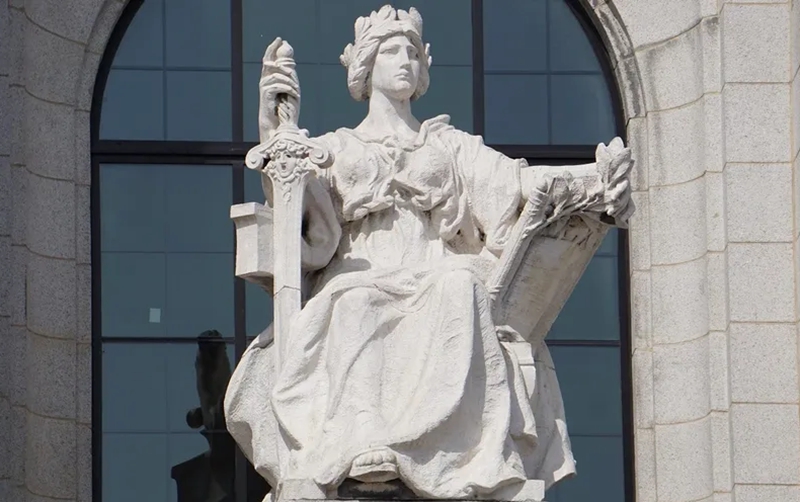
For open plazas, building entrances, and other outdoor locations, bronze is generally recommended due to its durability and weather resistance.
Life-size or large statues with a raised pedestal will create a strong landmark effect and highlight the authority of the institution.
The sculpture can be aligned with the main axis of the building to draw visitors’ attention and reinforce the architectural concept.
Indoor reception and office spaces
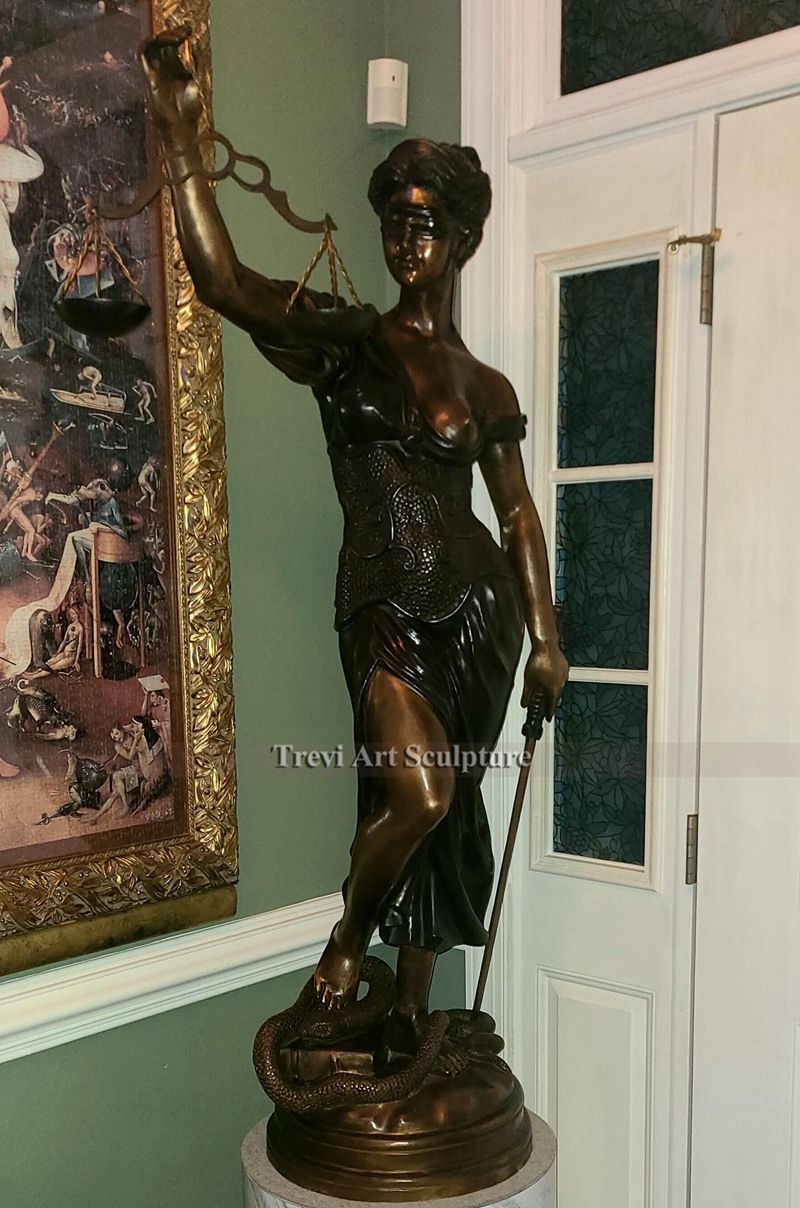
For indoor environments such as law firm receptions, negotiation rooms, or the lobby of a legal department, medium-sized bronze or marble statues are suitable.
A tabletop or stand-mounted Lady Justice in the 40–80 cm range works well for desks and shelves, while taller pieces in the 1.2–1.8 m range can be placed as focal points near walls or in corners. In these cases, the sculpture functions both as décor and as a visible declaration of professional values.
Why Clients Prefer Custom Lady Justice Sculptures from Chinese Factories
As legal services grow globally, demand for custom Lady Justice sculptures is rising. Many projects now seek tailored designs to better fit their size, style, or cultural needs. Chinese factories have become key players in this market due to the following advantages:
Advanced Craftsmanship
Decades of experience in bronze casting and stone carving enable factories to produce intricate details and high-quality large-scale sculptures.
Flexible Customization
Factories can adapt designs to meet client needs, including unique poses, facial expressions, clothing styles, pedestals, or logo integration.
Cost-Effective and Efficient Logistics
Competitive pricing and expertise in packing and shipping ensure smooth global delivery of both single and bulk orders.
Trevi’s Custom Lady Justice Sculptures and Services
To meet the diverse needs of international clients, Trevi factory provides a full range of customizable Lady Justice sculpture solutions in both bronze and marble. Whether you are designing a new courthouse, upgrading a law firm lobby, or creating a landmark for a commercial building, we can work with you from concept to installation.
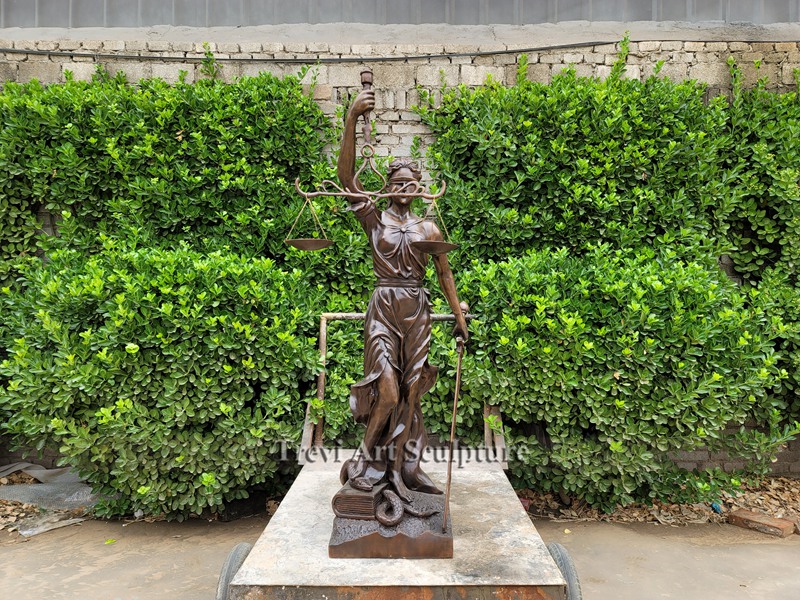
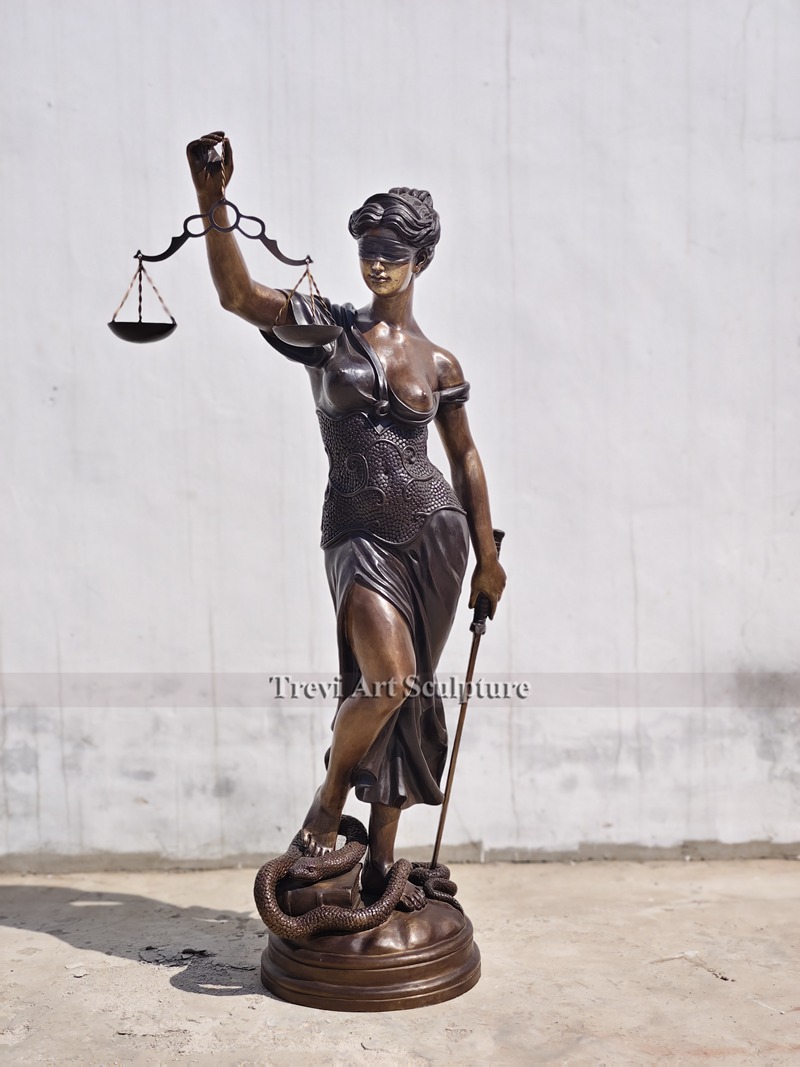
A Lady Justice sculpture is much more than a decorative ornament. It embodies the ideals of fairness, impartiality, and the rule of law, making it suitable for any space where order, trust, and responsibility are core values. A well-crafted Lady Justice can send a strong message about the principles that the organization stands for.
FAQs
Q1: What does Lady Justice symbolize?
Lady Justice represents fairness, impartiality, and the rule of law. Her scales, blindfold, and sword together express balanced judgment, neutrality, and the power to enforce legal decisions.
Q2: Why is Lady Justice sometimes blindfolded?
The blindfold symbolizes that justice should be impartial and “blind” to wealth, status, race, or political influence, judging only according to facts and the law.
Q3: Do all Lady Justice statues wear a blindfold?
No. In some classical versions based on the Greek goddess Themis, she is not blindfolded, emphasizing wisdom and moral insight rather than strict neutrality.
Q4: What are the most common materials for Lady Justice sculptures?
Bronze and marble are the most popular. Bronze is ideal for durable outdoor monuments, while marble is preferred for elegant indoor spaces such as lobbies and reception areas.
Q5: Where are Lady Justice statues usually installed?
They are commonly placed at courthouses, law firms, law schools, government buildings, financial institutions, and high-end office lobbies to underline a commitment to justice and integrity.
Q6: Can I customize the size and design of a Lady Justice statue?
Yes. Many manufacturers offer custom sizes, poses, finishes, and pedestal designs, allowing you to match the sculpture to your building style, brand image, and budget.
Q7: How do I choose between bronze and marble?
Choose bronze for outdoor or high-traffic public areas where weather resistance and structural strength are crucial. Choose marble for indoor spaces that require a refined, elegant, and timeless appearance.
Q8: How long does production and shipping usually take?
Lead time depends on size, complexity, and order quantity, but custom Lady Justice sculptures typically require several weeks for design and production, plus additional time for international shipping and customs.
Q9: What information should I prepare before ordering a custom Lady Justice statue?
It is helpful to prepare the installation location, desired height, preferred material (bronze or marble), style references (classical or modern), and any branding elements you want on the base.
Q10: Can Lady Justice be adapted to modern or minimalist architecture?
Yes. The pose, drapery, and level of detail can be simplified, and even abstract forms can be used, as long as key elements like the scales and sword remain recognizable.


